How Long Does Invisalign Treatment Take? A Complete Timeline Guide
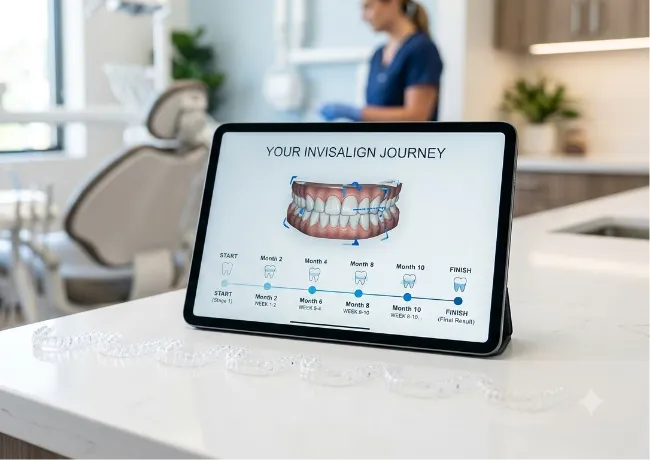
If you are considering Invisalign clear aligners, one of the first questions you may have is: How long does Invisalign treatment take?
The answer depends on your individual orthodontic condition. Factors such as dental crowding, spacing, bite problems, the amount of tooth movement required, your biological response, and how consistently you wear your aligners can all affect treatment duration.
According to Invisalign, treatment takes approximately 12 to 18 months on average, although some cases may be shorter and more complex cases may require longer treatment.
For patients considering Invisalign in Prabhadevi, Mumbai, understanding the treatment timeline can help you know what to expect from your first consultation through the completion of treatment.
What Is Invisalign?
Invisalign is a clear aligner system designed to gradually move teeth into planned positions. Instead of traditional metal brackets and wires, Invisalign uses a series of customized, removable clear aligners.
Each aligner is designed to make specific tooth movements. As you progress through the series, your teeth gradually move according to the treatment plan created by your orthodontist.
Because Invisalign aligners are removable, patients can take them out while eating and during brushing and flossing. However, consistent wear is important for treatment to progress as planned. Invisalign recommends wearing aligners for approximately 20–22 hours per day.
How Long Does Invisalign Treatment Take?
For many patients, Invisalign treatment takes approximately 12–18 months.
However, this is an average and not a fixed timeline. Every orthodontic case is different.
Patients with relatively minor alignment concerns may require less treatment, while patients with significant crowding, complex bite problems, severe rotations, or other orthodontic concerns may require longer treatment.
The only reliable way to estimate your treatment duration is through an orthodontic examination and individualized treatment planning.
What Determines Invisalign Treatment Duration?
Several factors can influence how long your treatment takes.
Complexity of Your Orthodontic Problem
The complexity of your case is one of the most important factors.
Mild spacing or minor alignment concerns may require relatively limited tooth movement. More complicated cases involving significant crowding, rotations, bite correction, or multiple types of tooth movement can take considerably longer.
Amount of Tooth Movement Required
Every tooth movement requires controlled orthodontic force.
If only a few teeth need minor adjustments, treatment may be relatively short. If many teeth need to be moved significantly, the treatment plan may require more aligners and additional time.
Your Daily Aligner Wear
Patient compliance can have a significant effect on treatment progress.
Invisalign recommends wearing aligners for approximately 20–22 hours every day. Removing them for long periods or frequently forgetting to wear them can interfere with the planned tooth movements.
Following your orthodontist’s instructions consistently can help keep your treatment on schedule.
Your Individual Biological Response
Orthodontic tooth movement is a biological process, and people do not respond to treatment at exactly the same rate.
Factors related to your individual biology can influence how quickly your teeth respond to orthodontic forces.
Oral Health
Healthy teeth and gums are important before and during orthodontic treatment.
If you have untreated cavities, gum problems, or other dental issues, these may need to be addressed as part of your overall treatment plan.
Need for Additional Aligners
Sometimes teeth do not move exactly according to the original digital prediction. Your orthodontist may therefore recommend additional aligners, commonly called refinement aligners.
These refinements can add time to the overall treatment but may be useful for achieving the planned result.
Invisalign Treatment Timeline: Step by Step
Understanding the different stages can give you a better idea of what the complete Invisalign journey looks like.
Initial Orthodontic Consultation
The first step is a consultation with an orthodontist.
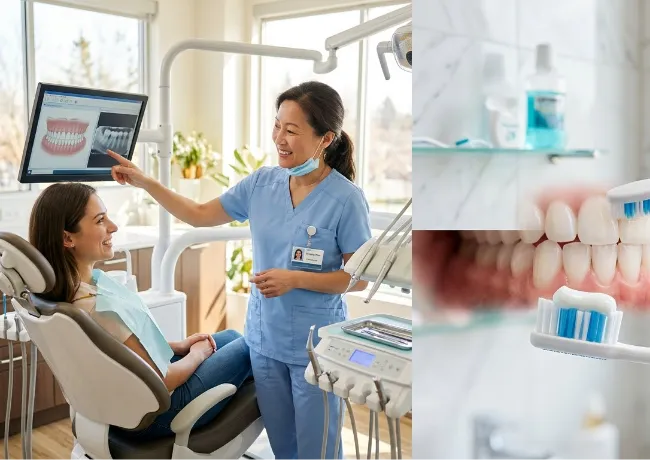
During the appointment, your orthodontist will evaluate your teeth, bite, gums, dental history, and overall orthodontic requirements.
The assessment may focus on concerns such as:
- Crowded teeth
- Gaps between teeth
- Crooked teeth
- Rotated teeth
- Overbite
- Underbite
- Crossbite
- Open bite
The orthodontist will then determine whether Invisalign is appropriate for your specific case.
Digital Scan and Treatment Planning
If Invisalign is suitable, your orthodontist may use a digital intraoral scanner to create a 3D model of your teeth.
This digital model helps the orthodontist plan the sequence of tooth movements and determine the approximate number of aligners required.
The treatment plan can also help explain the expected changes in your smile and provide an estimated treatment duration.
Aligner Manufacturing
Once the treatment plan is finalized, the customized aligners are manufactured.
The exact time required for this stage can vary depending on the case and provider.
Once the aligners arrive, your orthodontist will explain how to use and care for them.
Starting Your First Aligners
You will begin treatment with your first set of aligners.
Your orthodontist will explain how to:
- Insert and remove the aligners
- Clean them properly
- Store them safely
- Follow the recommended wearing schedule
- Change to the next aligner
You may experience some pressure or tightness when starting a new aligner. This can occur because the aligner is applying controlled forces to move your teeth.
Gradual Tooth Movement
This is the main stage of Invisalign treatment.
You will progress through a series of aligners, with each one designed to move your teeth gradually.
You may notice small changes during the early stages, but significant improvements generally become more noticeable as you progress through treatment.
Regular Progress Monitoring
Your orthodontist will monitor your treatment throughout the process.
Follow-up appointments allow the orthodontist to evaluate:
- Aligner fit
- Tooth movement
- Attachments
- Bite changes
- Oral health
- Overall treatment progress
If your teeth are not tracking as expected, your orthodontist can modify the treatment plan when necessary.
Refinement Aligners
Some patients may need additional aligners after completing their initial series.
Refinement aligners may be used when certain teeth require additional movement or when the final result needs further adjustment.
Not every patient requires refinements.
Completion of Active Treatment
Once the planned tooth movements have been achieved and your orthodontist is satisfied with the result, active Invisalign treatment is completed.
However, there is still one important stage remaining: retention.
What Happens After Invisalign Treatment?
Completing your aligners does not mean that your teeth will automatically remain in their new positions permanently.
Teeth can naturally move after orthodontic treatment. Retainers are therefore used to help maintain the alignment achieved during treatment.
Your orthodontist will recommend a retention plan based on your individual needs.
Following the recommended retainer schedule is an important part of maintaining your Invisalign results.
Can Invisalign Treatment Be Completed in Six Months?
Some patients with relatively minor orthodontic concerns may complete treatment in a shorter period.
However, six months should not be considered a standard Invisalign treatment time.
A patient requiring only limited tooth movement may have a shorter treatment plan, while someone with significant crowding or bite correction requirements may need substantially longer.
Instead of choosing treatment based on a specific number of months, it is better to ask your orthodontist for an individualized treatment estimate.
When Will You Start Seeing Invisalign Results?
Many patients begin noticing changes during the early stages of treatment.
However, the timing varies from person to person.
Some changes may be subtle initially, while more noticeable improvements develop as you progress through additional aligners.
Your orthodontist can monitor your progress and determine whether your teeth are moving according to the treatment plan.
Is Invisalign Faster Than Traditional Braces?
It is difficult to say that Invisalign is always faster than traditional braces because treatment duration depends on the individual case.
Some cases may be completed in a similar timeframe, while others may differ depending on the complexity of the required tooth movements and patient compliance.
The choice between Invisalign and braces should therefore be based on your orthodontic needs, treatment goals, lifestyle, and your orthodontist’s recommendation rather than treatment duration alone.
What Can Delay Invisalign Treatment?
Several situations can potentially extend your treatment timeline.
Inconsistent Aligner Wear
Not wearing your aligners for the recommended amount of time can affect treatment progress.
Lost or Damaged Aligners
If an aligner is lost or damaged, you should contact your orthodontist for instructions rather than simply moving ahead to the next aligner.
Missed Follow-Up Appointments
Regular monitoring helps your orthodontist identify problems and make adjustments when needed.
Teeth Not Tracking as Planned
Sometimes a tooth may not move exactly as predicted. Additional aligners or modifications may then be required.
Poor Oral Health
Dental problems such as cavities or gum disease may need attention during orthodontic treatment and can affect the overall treatment process.
How to Make Your Invisalign Treatment More Efficient
While you cannot control every factor affecting tooth movement, you can take several steps to support your treatment.
Wear Your Aligners as Instructed
Aim to follow the recommended 20–22 hours of daily wear.
Maintain Good Oral Hygiene
Brush and floss regularly to keep your teeth and gums healthy throughout treatment.
Clean Your Aligners Properly
Follow your orthodontist’s instructions for cleaning and caring for your aligners.
Attend Your Follow-Up Appointments
Regular appointments allow your orthodontist to monitor progress and address potential issues early.
Follow Your Orthodontist’s Instructions
Every Invisalign treatment plan is different, so follow the instructions provided specifically for your case.
Invisalign Treatment at Smile Bracefully in Prabhadevi
If you are looking for Invisalign treatment in Prabhadevi, Mumbai, Smile Bracefully Orthodontic Center and Dental Clinic is located on Gokhale Road in Prabhadevi West.
The clinic is led by Dr. Kunal Pallan, BDS, MDS in Orthodontics and Dentofacial Orthopaedics, and its listed services include Invisalign and other clear-aligner treatments.
During a consultation, your orthodontic condition can be evaluated to determine whether Invisalign is appropriate and what treatment duration may be suitable for your case.
Rather than relying on a generic timeline, an individualized orthodontic assessment can provide a more realistic estimate based on your teeth, bite, treatment goals, and expected tooth movements.
Frequently Asked Questions About Invisalign Treatment Time
How long does Invisalign take on average?
Invisalign treatment takes approximately 12–18 months on average, although individual treatment times can be shorter or longer depending on the complexity of the case.
Can Invisalign take more than 18 months?
Yes. Complex orthodontic cases may require more than 18 months, particularly when significant tooth movement or bite correction is involved.
How many hours a day should I wear Invisalign?
Invisalign recommends wearing aligners for approximately 20–22 hours per day, unless your orthodontist provides different instructions.
Does Invisalign hurt?
You may experience mild pressure, tightness, or temporary discomfort when starting a new aligner. This is generally associated with the pressure used to move the teeth.
Do all Invisalign patients need attachments?
No. Attachments are used when specific tooth movements require additional control. Whether you need them depends on your individual treatment plan.
Will I need refinement aligners?
Not necessarily. Some patients complete treatment with their initial series, while others may require additional aligners to achieve the planned result.
What happens after Invisalign treatment?
After active treatment, you will generally need retainers to help maintain your new tooth positions. Your orthodontist will recommend an appropriate retention schedule.
Final Thoughts
So, how long does Invisalign treatment take?
For many patients, Invisalign treatment takes around 12–18 months, but there is no universal timeline. Some relatively simple cases may take less time, while complex orthodontic problems can require longer treatment.
Your treatment duration depends on the complexity of your case, the amount of tooth movement required, your individual response to orthodontic treatment, and how consistently you wear your aligners.
If you are considering Invisalign in Prabhadevi, Mumbai, the best way to understand your expected treatment duration is to have an orthodontic consultation and personalized treatment plan.
The goal should not simply be to finish Invisalign as quickly as possible. A properly planned treatment should focus on achieving healthy tooth alignment, an appropriate bite, and a stable long-term result.