Dental Implants vs. Dentures: Which Is Right for You?
Missing teeth can affect much more than the appearance of your smile. Depending on the number and location of the missing teeth, tooth loss may influence chewing, speech, comfort, confidence, and the way you feel about everyday activities such as eating or speaking.
Fortunately, modern dentistry offers several options for replacing missing teeth. Two of the most commonly considered solutions are dental implants and dentures.
But which one is right for you?
The answer is not the same for everyone. The ideal treatment depends on several factors, including the number of teeth you are replacing, your oral and overall health, the condition of your gums and jawbone, your treatment goals, lifestyle preferences, and budget.
This guide explains the key differences between dental implants and dentures to help you have a more informed discussion with your dentist.
What Are Dental Implants?
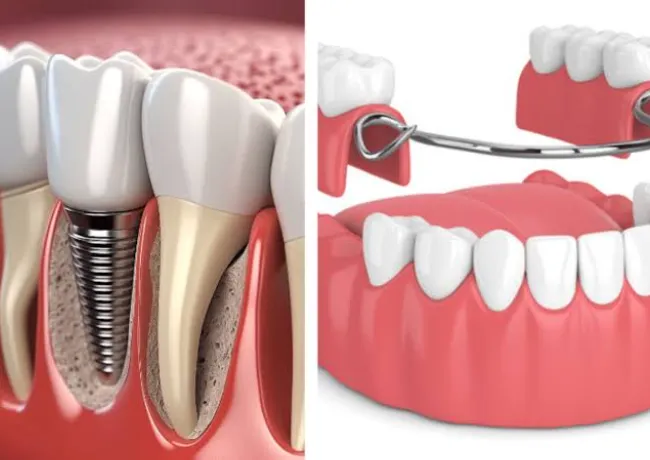
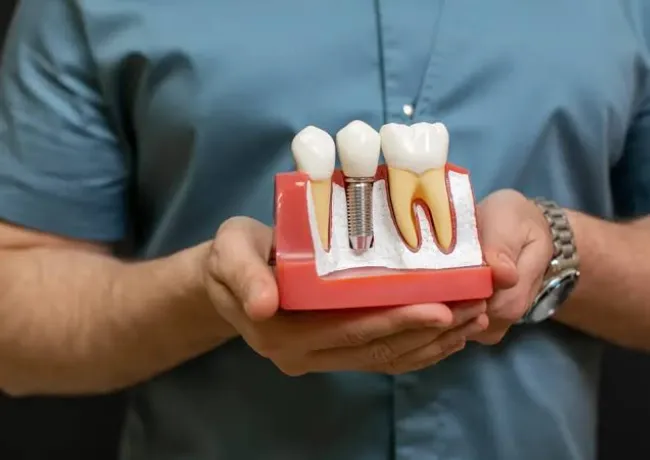
A dental implant is a prosthetic tooth replacement system. The implant itself is placed into the jawbone and serves as a foundation for a replacement tooth or teeth. After appropriate healing and treatment planning, it may support a crown, bridge, or denture.
Dental Implant treatment typically involves several stages, which may include:
- A dental examination and treatment planning
- X-rays or other diagnostic imaging
- Implant placement
- A healing period during which the implant integrates with the surrounding bone
- Placement of an abutment, when required
- Placement of the final crown, bridge, or other restoration
The exact process varies from patient to patient. Some people may also require additional procedures, such as bone grafting, depending on the amount and quality of available jawbone.
What Are Dentures?
Dentures are removable prosthetic appliances designed to replace missing teeth.
They may be used to replace:
- All teeth in the upper or lower jaw
- Several missing teeth
- Teeth in different areas of the mouth
The two common categories include:
Complete Dentures
Complete dentures are generally used when all teeth in an arch are missing.
Partial Dentures
Partial dentures are used when some natural teeth remain and replacement teeth are needed to fill the gaps.
There are also implant-retained or implant-supported denture options that combine features of both treatment approaches. The appropriate choice depends on factors such as the number of missing teeth, bone condition, patient needs, preferences, and treatment goals.
Dental Implants vs. Dentures: A Quick Comparison
| Factor | Dental Implants | Traditional Dentures |
| Placement | Surgically placed in the jawbone | Removable appliance |
| Stability | Fixed or securely supported, depending on restoration | May move or shift depending on fit |
| Treatment time | Can require a longer treatment process | Often completed more quickly |
| Jawbone requirements | Requires sufficient bone or additional treatment | Can often be considered even when bone volume is limited |
| Daily care | Requires regular oral hygiene and professional care | Requires daily cleaning and maintenance |
| Removability | Fixed restorations are not removed by the patient | Traditional dentures are removable |
| Initial cost | Often higher | Generally lower initially |
| Long-term considerations | Depends on oral health, maintenance, and individual circumstances | May require adjustment, relining, repair, or replacement over time |
This comparison provides a general overview. Your dentist can recommend the most suitable option after evaluating your individual oral condition.
The Advantages of Dental Implants
Dental implants can be an appealing option for people who want a replacement that feels more similar to a natural tooth and remains securely supported in the mouth.
1. Improved Stability
Because implants are anchored within the jaw, they can provide a stable foundation for replacement teeth.
For patients replacing a single tooth, an implant-supported crown can replace the missing tooth without relying on a removable appliance.
For multiple missing teeth, implants may also support bridges or dentures.
2. A More Natural Feel
Many patients prefer the feel of a fixed implant-supported restoration because it does not need to be removed in the same way as a conventional denture.
However, the final experience depends on the treatment design, restoration, oral health, and individual adaptation.
3. Support for Chewing and Function
A stable tooth replacement can help restore oral function. Implant-supported restorations are designed to help patients bite and chew more comfortably than they may be able to with missing teeth.
Research and professional guidance also recognize implant-supported dentures as an option that may improve retention and oral function compared with conventional dentures in appropriate patients.
4. They Can Support Different Types of Restorations
Dental implants are not limited to replacing a single tooth. Depending on the treatment plan, they can support:
- A single crown
- A bridge
- A full-arch restoration
- An implant-retained denture
- An implant-supported denture
This flexibility makes implants suitable for many different tooth-loss situations, provided the patient is an appropriate candidate.
Things to Consider Before Choosing Dental Implants
Although dental implants offer important advantages, they are not automatically the right solution for every patient.
Implant Treatment Is a Clinical Procedure
Implant placement requires careful planning and may involve surgery. Your dentist will evaluate your oral health and other relevant factors before recommending treatment.
Treatment May Take Longer
The overall process can involve healing time between stages. The exact timeline depends on the patient’s oral condition, treatment plan, healing response, and whether additional procedures are required.
Bone Availability Matters
Adequate jawbone is important for many implant procedures. If bone volume or quality is insufficient, additional treatment such as bone grafting may sometimes be considered.
The Initial Investment May Be Higher
Dental implants often involve a higher initial treatment cost than conventional dentures. The total cost can vary significantly depending on the number of teeth being replaced, the need for additional procedures, the type of restoration, and other clinical factors.
The Advantages of Dentures
Dentures remain an important tooth replacement option and can be an appropriate choice for many patients.
1. A Less Invasive Option
Traditional dentures generally do not require implant surgery. This may make them suitable for patients who are not candidates for implant placement or who prefer a removable solution.
2. Can Replace Multiple or All Missing Teeth
Dentures can replace a large number of missing teeth and may be used for partial or complete tooth loss.
3. Usually Lower Initial Cost
Compared with many implant-based treatment plans, conventional dentures generally have a lower initial cost.
For patients working within a specific budget, dentures may provide a practical solution for restoring missing teeth.
4. Treatment May Be Completed More Quickly
In many cases, dentures can be completed without the healing period associated with implant integration. However, the actual treatment timeline depends on the patient’s oral condition and the type of denture being provided.
Things to Consider Before Choosing Dentures
Traditional dentures also come with limitations that patients should understand.
Dentures Are Removable
Unlike fixed implant-supported restorations, conventional dentures are designed to be removed for cleaning and care.
Some patients adapt quickly, while others may require time to become comfortable with their dentures.
Fit Can Change Over Time
The tissues and bone beneath a denture can change over time, which may affect fit and stability. A poorly fitting denture may require professional evaluation, adjustment, relining, repair, or replacement.
Daily Maintenance Is Essential
Dentures need to be cleaned regularly to remove food particles and bacterial buildup. They should also be handled carefully and maintained according to your dentist’s and product manufacturer’s recommendations.
What About Implant-Supported Dentures?
For some patients, the decision does not have to be strictly between traditional dentures and a fully fixed implant restoration.
Implant-supported or implant-retained dentures may offer a middle-ground solution.
In these treatments, dental implants are used to improve the retention and stability of a denture. Depending on the treatment design, the denture may remain removable by the patient or may be fixed in place.
This option may be particularly useful for patients who:
- Want more stability than a conventional denture
- Have difficulty with loose dentures
- Want to reduce dependence on denture adhesives
- Are missing several or all teeth
- Are suitable candidates for implant treatment
The number and placement of implants, as well as the final prosthetic design, should be determined through individualized clinical planning.
Which Option Is Better for Comfort?
Comfort is highly individual.
A well-designed and properly fitted denture can provide a functional solution for tooth replacement. However, some people may experience movement or changes in fit over time.
Implant-supported restorations may offer greater stability because they are supported by implants rather than relying solely on the surrounding oral tissues.
The right choice depends on your anatomy, treatment goals, and ability to maintain the restoration.
Which Option Is Better for Eating?
Both dentures and implants are designed to restore oral function, but the experience can differ.
Traditional dentures may require an adjustment period, particularly for people who have recently started wearing them. The fit and stability of the denture can also influence chewing.
Implant-supported restorations are generally more stable, which can improve confidence while biting and chewing. Implant-retained overdentures have also been associated with improved masticatory performance in appropriate patients compared with conventional complete dentures.
Which Option Is Easier to Maintain?
Neither option should be considered maintenance-free.
Dental Implant Care
Implant-supported teeth require consistent oral hygiene and regular professional dental care.
Depending on the type of restoration, your dentist may recommend specific cleaning methods for the areas around implants and restorations.
Denture Care
Dentures should be cleaned daily. Professional guidance from the American Dental Association notes that dentures can accumulate plaque, stains, and calculus and should be appropriately cleaned and maintained. Ill-fitting dentures should also be professionally evaluated rather than relying on adhesive as a permanent solution.
Are Dental Implants Right for Everyone?
Not necessarily.
Dental implant suitability depends on an individual clinical assessment. Factors your dentist may consider include:
- The number and location of missing teeth
- Gum health
- Jawbone quantity and quality
- Oral hygiene
- Existing dental conditions
- Healing considerations
- Medical history and medications
- Smoking and other lifestyle factors
- Treatment expectations
Some patients may require preparatory treatment before implants can be considered.
That is why a proper consultation and diagnostic evaluation are essential before deciding on treatment.
Are Dentures the Right Choice for Everyone?
Dentures can be an effective solution for many patients, but the type and design of the denture should be tailored to the individual’s needs.
Your dentist may consider:
- Whether you are missing some or all teeth
- The health of your remaining teeth
- Gum and jawbone condition
- The fit and stability required
- Your ability to manage a removable appliance
- Your budget and treatment preferences
For some people, conventional dentures may be the best option. Others may benefit from partial dentures, implant-supported dentures, or another restorative solution.
Dental Implants vs. Dentures: How Cost Should Be Evaluated
Cost is an important consideration, but it should not be the only factor.
When comparing treatment options, ask about the complete treatment plan.
For dental implants, the total cost may involve:
- Consultation and diagnostics
- Implant placement
- Additional procedures, if needed
- Abutments
- Crowns, bridges, or dentures
- Follow-up appointments
For dentures, ask whether the quoted cost includes:
- Examinations
- Extractions, if required
- Denture fabrication
- Adjustments
- Future relining or repairs
A detailed treatment estimate can help you understand the full scope of the proposed treatment.
Questions to Ask Your Dentist Before Making a Decision
Before choosing between implants and dentures, consider asking:
- Am I a suitable candidate for dental implants?
- Do I have sufficient jawbone for implant placement?
- Would I need additional procedures before receiving implants?
- Which option is best for the number of teeth I am missing?
- How long will my treatment take?
- What will the total treatment involve?
- What type of maintenance will be required?
- What are the possible alternatives?
- What are the expected costs and follow-up requirements?
- Would implant-supported dentures be an appropriate option for me?
The answers can help you make a decision based on your individual needs rather than choosing a treatment simply because it is more expensive, more popular, or recommended by someone else.
So, Dental Implants or Dentures: Which Is Right for You?
There is no universal winner.
Dental implants may be worth considering if you:
- Want a stable tooth replacement solution
- Are a suitable candidate for implant treatment
- Prefer a fixed or securely supported restoration
- Are comfortable with a longer treatment process
- Are prepared for the associated treatment and maintenance requirements
Dentures may be a suitable option if you:
- Prefer a removable tooth replacement
- Need to replace several or all missing teeth
- Are looking for a generally lower initial-cost option
- Are not a suitable candidate for implant surgery
- Prefer to avoid an implant procedure
Implant-supported dentures may be worth discussing if you:
- Want greater stability than conventional dentures
- Have problems with denture movement or retention
- Are missing multiple or all teeth
- Are suitable for implant treatment but prefer a denture-based solution
The Importance of a Personalized Dental Consultation
Replacing missing teeth is not a one-size-fits-all decision.
The most appropriate treatment should be based on a thorough evaluation of your oral condition and personal goals. A dentist can assess your teeth, gums, jawbone, bite, and overall treatment requirements before discussing the available options.
Whether you choose dental implants, traditional dentures, or an implant-supported solution, the goal is to select a treatment that is appropriate for your oral health and practical for your lifestyle.
Consult Smile Bracefully About Your Tooth Replacement Options
If you are considering treatment for missing teeth, a professional consultation can help you understand the options available for your individual situation.
Smile Bracefully is located in Prabhadevi, Dadar West, Mumbai. You can discuss your concerns, treatment goals, and suitable tooth replacement options with a dental professional after an appropriate clinical assessment.
Book a consultation to understand whether dental implants, dentures, or another tooth replacement option may be suitable for you.
Frequently Asked Questions
Are dental implants better than dentures?
Not necessarily. Dental implants and dentures serve different needs. The better option depends on factors such as the number of missing teeth, jawbone condition, oral health, treatment preferences, and budget.
Can dentures be replaced with dental implants?
In some cases, yes. A patient who currently wears dentures may be evaluated for dental implants or implant-supported dentures. Suitability depends on the individual’s oral condition and available bone.
How long do dental implants take?
Treatment time varies. Some cases require several stages and healing periods, while others may follow a different treatment protocol. Your dentist can provide a more accurate timeline after examination and treatment planning.
Do dentures need to be replaced?
Dentures can change in fit or condition over time and may require adjustment, relining, repair, or replacement. Regular dental evaluations can help identify when professional attention is needed.
Do dental implants require special care?
Dental implants require regular oral hygiene and professional follow-up. The specific care routine depends on the type of implant-supported restoration.
Can I get implants if I have bone loss?
Possibly. Some patients with insufficient bone may require additional procedures, such as bone grafting, before implant treatment can be considered. A clinical examination is necessary to determine suitability.
Is there an option between traditional dentures and fixed implants?
Yes. Implant-supported or implant-retained dentures may provide improved retention and stability while still functioning as a denture-based tooth replacement option. The most appropriate design depends on your individual clinical needs.